
A particular kind of quiet hits you a few hours out of any major Australian town, when the landscape takes over completely. I’ve felt it driving through outback Queensland on the way to Carnarvon Gorge and on the Newell Highway between Brisbane and Melbourne. That never-ending sky does something to your brain, making you slow down and breathe differently. At some point on those drives I’ve checked my phone and the bars had disappeared entirely. No signal. Not even a flicker.
If you’ve done any regional travel in Australia, you know the feeling. It’s happened to me on various east coast inland road trips, between towns riding on the Ghan, and at places like Carnarvon Gorge where the gorge walls are spectacular and the mobile infrastructure is essentially nonexistent. It’s not a niche problem either. The ACCC recently launched an inquiry into regional mobile coverage, examining whether regulating wholesale access to mobile services could improve outcomes for the people living, working and travelling in areas where coverage has always been unreliable. The fact that a formal inquiry was needed tells you everything about the state of things beyond the coast.
Staying connected in remote Australia takes more planning than most people expect. Here’s what actually works, and what to sort out before you leave.
Planning your trip?
Insurance: Cover-More
Hotels: Agoda
eSIM: Saily
Rentals: Discover Cars
Transfers: Welcome Pickups
RVs: Motorhome Republic
I register as an affiliate for anything I use and recommend. Some of the links on this page are affiliate links, which means that if you click them and make a purchase, I may earn a commission. This commission comes at no additional cost to you, and in some cases, these links may even unlock savings or give you bonuses I’ve negotiated. You can find out more about this here and here.
Why mobile coverage in remote Australia is so patchy
Australia is enormous. About 75% of the landmass is classified as very remote, and while Telstra covers around 99.7% of the population, population and landmass are very different things. If you’re on Telstra directly, you’ll get the best coverage available on any mobile network in the outback. If you’re on an MVNO that runs on Telstra’s network, like Boost or Belong, you may not get the same geographic reach. That distinction matters more than people realise when you’re three hours from the nearest town.
Optus covers urban areas well but drops off significantly beyond regional centres. Vodafone is largely a city network for remote travel purposes. The honest answer is that no mobile network guarantees coverage in genuinely remote areas. You need a backup.

The best ways to stay connected when there’s no signal
There’s no single perfect solution. The right setup depends on how remote you’re going, how long you’ll be out there and how much you want to spend. Most people end up combining two options.
Personal locator beacon (PLB)
A PLB is the most important piece of safety gear for remote travel in Australia, full stop. It costs a few hundred dollars, needs no subscription and transmits a distress signal directly to the Cospas-Sarsat satellite system, which routes it to AMSA’s Joint Rescue Coordination Centre. One button press and search and rescue knows exactly where you are.
PLBs do one thing: call for help. They don’t allow for check-ins or two-way communication. But for any solo travel or serious backcountry trip, this is the non-negotiable baseline. Recently, Tasmania search and rescue crews handled four people in three separate incidents in a single day, including a man lost for five hours at Meander Falls after becoming separated from his walking companion and a woman who needed to be winched off Mount Killiecrankie by helicopter after she couldn’t walk out from a solo bushwalk. In at least one case, the person called for help using a mobile phone. That’s fine if you have signal. The PLB is your insurance for when you don’t.

Satellite messenger (Garmin inReach, ZOLEO, SPOT X)
A satellite messenger adds two-way texting, live GPS tracking and SOS capability on top of a PLB’s emergency function. The Garmin inReach Mini 2 is the most popular option in Australia and runs on the Iridium satellite network, which has pole-to-pole coverage. Your family can follow your route in real time, you can send and receive texts, and you have an SOS button if things go wrong.
The catch is a monthly subscription plan. For a long road trip or a dedicated remote adventure, it’s absolutely worth it. For a one-off trip, it may be more economical to pair a PLB with a satellite phone rental instead.
One useful note: inReach devices work more reliably than satellite phones in dense vegetation and during heavy cloud cover, because they use a different signal methodology. Worth knowing if you’re heading into national parks or wet-season tropics.

Satellite phone
A satellite phone lets you make actual voice calls from almost anywhere with a clear view of the sky. Hardware typically costs upwards of $1,000 and call rates are high. Unless you’re heading out regularly, renting is the smarter move. Some outdoor hire shops and campervan companies offer them as add-ons, so it’s worth asking when you book.

eSIM or local SIM with Telstra network coverage
For the majority of regional travel in Australia, a good eSIM on the Telstra network is your most practical everyday option. It covers you well across most of regional Queensland, outback towns and highway stretches between centres. One thing worth knowing is that standard data-only eSIMs won’t handle voice calls or SMS — if you need those while travelling, look at options that include an eSIM with phone number capability, which bundles data and a real phone number in the same app. Also look for Band 28 (700 MHz) compatibility when choosing an eSIM for remote Australian travel, as this is the frequency used for extended 4G coverage in regional areas.
The limitation is exactly what you’d expect: an eSIM can only give you signal where the underlying network has signal. Pair it with a PLB or satellite messenger for anything genuinely remote.
Satellite internet (Starlink)
If you’re travelling in a caravan or campervan and spending extended time at remote sites, Starlink Roam is worth looking into. It’s not a substitute for a PLB, but it gives you solid internet access at camp in areas where nothing else reaches. Increasingly popular with grey nomads doing extended outback trips.

How to get the most out of a weak signal
Before writing off a dodgy connection, try a few things. Move to higher ground, step outside, or hold the phone near a window. It sounds obvious, but it genuinely makes a difference. I’ve picked up enough signal to send a message from a hilltop that had nothing at ground level. Turn off background app refresh and automatic updates so whatever data you have goes to maps and messages, not silent downloads in the background.
Travelling with others? Whoever has the strongest signal can share it as a mobile hotspot for the group. Just make sure someone has a power bank on hand because a hotspot session drains a battery fast.
A note on signal boosters: they are illegal to use in Australia unless they’re telco-approved. The ACMA recently ran an audit and found dozens of unauthorised boosters and repeaters listed online across major platforms including Amazon Australia, eBay, Facebook Marketplace and Gumtree. All were removed after the ACMA contacted the platforms. If you want better reception at a campsite or in a caravan, check with your telco about approved options. The Cel-Fi GO is currently the only legal consumer signal booster available in Australia.

How to prepare for no signal before you leave
Assume you’ll lose mobile coverage at some point. Plan around it. Download offline maps before you leave the last major town. Google Maps offline areas work well, and Maps.me is worth having as a backup with more granular detail on remote roads. Save accommodation confirmations, emergency contacts, trail notes and park entry information somewhere you can access without signal.
Tell someone your route and your expected check-in times, then actually follow through. This is the step most people skip and the one that matters most if something goes wrong. A trip plan lodged with a responsible person is free and potentially life-saving.
Check whether Telstra has coverage along your specific route using the Telstra coverage checker before you leave, not when you’re already out there. Queensland National Parks also publishes information on connectivity at each park.
Pack a power bank, a car charger and a paper map as standard. For serious outback routes, consider a UHF CB radio for communication with other vehicles on remote tracks.

Essential remote travel kit checklist
If you’re heading somewhere genuinely remote in Australia, here’s the baseline:
- PLB (registered with AMSA, check battery expiry)
- eSIM or SIM on the Telstra network
- satellite messenger for extended trips
- offline maps downloaded before departure
- paper maps for your region
- power bank and car charger
- UHF CB radio for 4WD tracks, and
- written trip plan left with someone reliable

Sort the backup, then enjoy the quiet
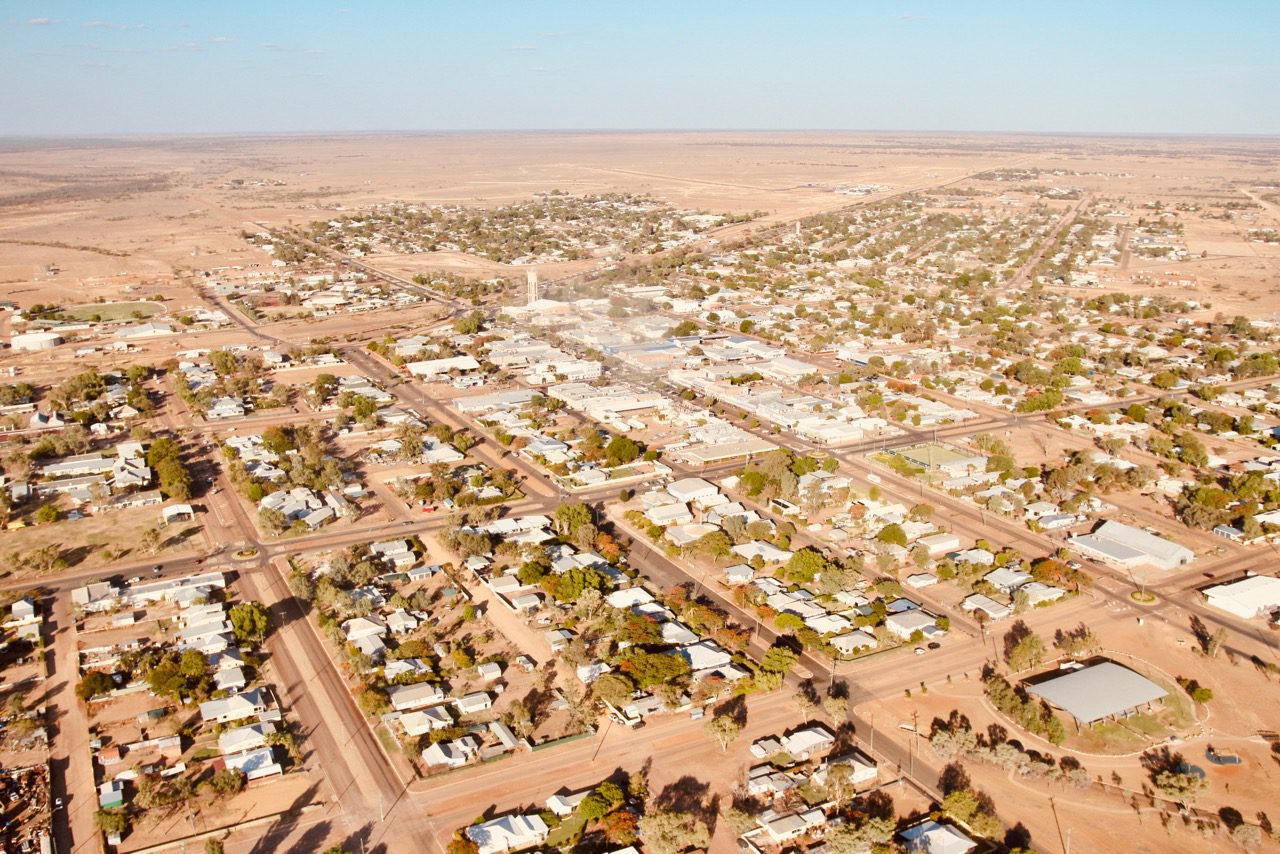
Staying connected in remote Australia isn’t about being online the whole time. It’s about having a way to reach people if something goes wrong, and giving yourself enough confidence in the plan to actually switch off and look at the view. Driving out to Longreach, the sky does something to you that no amount of screen time can replicate. Sort this before you leave, put the phone away and enjoy the place you went to all the trouble of reaching.
Heading to outback Queensland? Read my guide to the best things to do in Longreach, or explore some of Australia’s best road trip routes for the full picture.
Essential travel resources for your trip!
If you found this post useful, please use the affiliate links below. I’ll earn a small commission at no extra cost to you. Rest assured, these are the products and services I love and use. Read the disclaimer for more information. Thanks for your support! – Matt.
Insurance I use: Cover-More
Hotels: Agoda
eSIM: Saily
Rentals: Discover Cars
RVs: Motorhome Republic
Author: Matt Turk
Brisbane-based adventurer and content creator passionate about travel, personal growth, fitness and creativity. Matt loves crafting vibrant content that inspires and entertains.